

Establishing a Business in the Democratic Republic of the Congo: A Comprehensive Guide
Unlock the potential of doing business in the DRC by understanding company registration processes, investment opportunities, and legal requirements. Set up your business for success in Congo's dynamic market.
The Democratic Republic of the Congo (DRC) offers numerous opportunities for entrepreneurs looking to establish a business in Africa. With its rich natural resources and strategic location, the DRC is an attractive destination for foreign investment. Understanding the various legal structures available for company registration is crucial to successfully navigating the DRC's business landscape.
Types of Business Entities in DRC
Limited Liability Company (LLC)
The most common business entity in the DRC is the Limited Liability Company (societe a responsabilite limitee or SARL). It is ideal for both local and foreign entrepreneurs. An LLC can be registered with just one shareholder and a minimum capital of US$1. However, opening a capital account and injecting the paid-up capital is necessary before completing the company registration.
Simplified Joint Stock Company (SAS)
The Simplified Joint Stock Company is similar to an LLC but provides greater flexibility in governance. This entity requires only one shareholder and also a minimum paid-up capital of US$1. SAS is ideal for ventures with multiple investors due to its flexible share transfer options.
Public Limited Company (PLC)
For larger businesses, the Public Limited Company (societe anonyme or SA) is a suitable structure. This entity requires a minimum of three shareholders and a paid-up capital of US$20,000. An annual audit and submission of financial statements are mandatory for PLCs, making it a more stringent entity to operate.
Free Zone Company
Registering a company within a Special Economic Zone (SEZ) provides numerous benefits, including tax exemptions. The DRC offers attractive investment opportunities in industries such as hydroelectricity, heavy industries, and agribusiness. A minimum investment and job creation criteria must be met for SEZ eligibility.
Branch and Representative Office
Foreign companies also have the option to establish a branch or representative office in the DRC. These entities can operate for up to two years, after which they must convert to a subsidiary or be closed. These setups are mainly used for market research and promoting the foreign company's business without engaging in trade.
Key Components of the Business Setup Process
Capital and Financial Requirements
Opening a capital account and ensuring sufficient registered capital is essential for company registration. Capital requirements may vary, and each entity has specific financial submission obligations.
Legal and Tax Considerations
Understanding the legal and tax landscape, including obtaining a tax identification number and fulfilling annual reporting requirements, is crucial. Engaging with legal experts during the incorporation process can streamline these procedures.
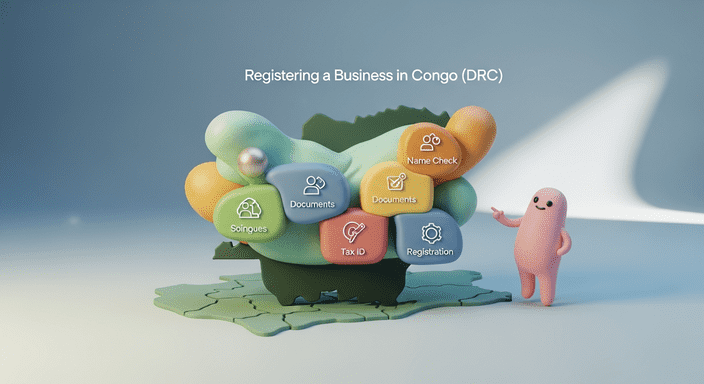
Company Registration and Documentation
The incorporation process involves submitting articles of association and ensuring all identification documents are in order. Verifying the registration requirements ahead of time can prevent delays.
FAQs
What are the most common business structures in the DRC?
The Limited Liability Company (SARL) and the Simplified Joint Stock Company (SAS) are popular due to their flexibility and ease of setup.
How long does it take to register a company in the DRC?
Under normal circumstances, the company registration process can be completed in a few weeks, subject to meeting all business procedures.
What are the tax incentives for businesses in DRC?
Companies registered in special economic zones may benefit from corporate tax exemptions and other business creation incentives.
Conclusion
The Democratic Republic of the Congo presents a landscape ripe for investment. Understanding the various business entities, coupled with the right strategies for company costs and operations, can position enterprises for success.
Comments (0)